Meta Wants Businesses to Pay to Share Links
Meta just announced Meta One, and one of its supposed benefits is hard to believe. Jon breaks down why the change makes no sense, and the old-school workaround he's now weighing instead.
If you've opted into testing AI generation features, you may have spotted a new enhancement: Landing Page Experience. Here's how it works...
For years the direction of Meta advertising was clear enough to predict, and most of those predictions held up. But AI has scrambled the picture, and the trend line now runs into a space that's genuinely hard to comprehend. Jon sets the tactics aside for an honest, uneasy look at…
AI is coming to ChatGPT ads in the form of a new Text Customization feature, which can personalize headline and description text. Here's what you need to know...
Meta is removing placement control for sales and leads campaigns, and advertisers are predictably freaking out. Jon explains why the change matters far less than it sounds, and why value rules are the control you should have been reaching for all along.
If you've been struggling with the bugginess of the new creative workflow (Multimedia Experience), you can still switch back to the old way. Here's how...
Fifteen years in, the celebrating gives way to a more honest look back at what worked and what didn't. This final entry in the anniversary series shares the lessons that mattered most, but it doesn't end there. Jon also opens up about two real regrets, including one he still hasn't…
If you're using Customer Lifecycle Strategy to acquire new customers with Meta ads, check this. Meta's doing something weird.
To mark 15 years since a layoff turned into JonLoomer.com, Jon sets aside the usual solo format for a rare interview with longtime teammate Luke Elliott. It's a blast from the past, but really a conversation about change: how Jon went from the complicated-targeting guy to preaching simplicity, why the…
Here are 15 years of discontinued features from 15 years of Facebook ads. Read my post with a full trip through memory lane at jonloomer.com/15
Two 15-year anniversaries fall the same month, a second layoff and the launch of JonLoomer.com days later. These episodes usually stay locked on Meta advertising, but a long drive to move the youngest son into college makes room to look back. Jon tells the origin story behind the brand, from…
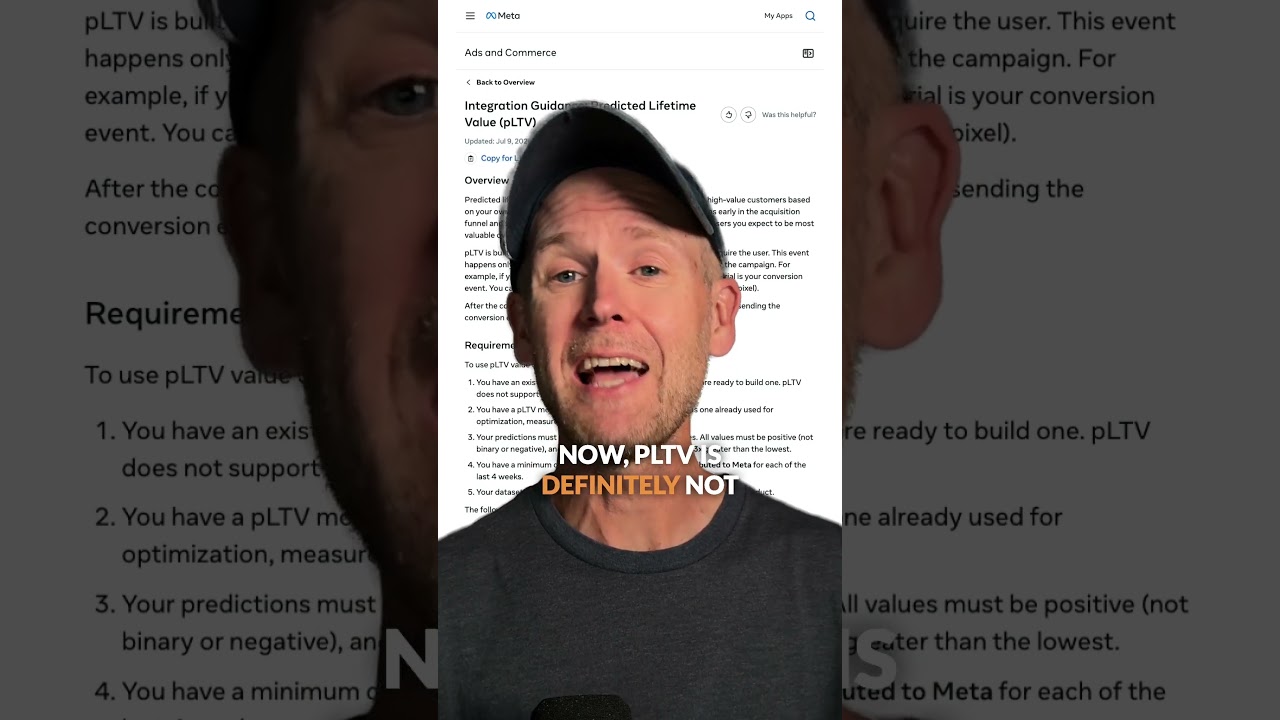
Predicted Lifetime Value (or pLTV) value optimization helps you acquire high-value customers using your own long-term value predictions. Here's how it works...
Value rules are one of Meta's most useful newer features, letting you nudge bids up or down instead of restricting your audience outright. But advertisers reach for them far too often, and because value rules deliberately raise costs. Jon lays out the two questions that separate a necessary value rule…
Some advertisers have a new option for Custom Attribution when selecting the attribution model. This allows you to define how much credit each Meta ads touchpoint gets based on your attribution model.
One of the most popular myths in Meta advertising is that the conversion numbers are made up. But Meta only knows about a purchase because your event fired, which means the real problem is almost never fabricated results, it's advertisers who don't understand what their conversions actually mean. Jon explains…
The dominant strategy leans into pumping out more ads with an eye on creative diversity. But should you start with fewer ads? That's my recommendation. Here's why...
Incremental attribution reports only the conversions your ads actually caused, and most advertisers would be better off making it their default. But standard attribution isn't the real problem, it's the advertisers who take inflated view-through results at face value and scale on them anyway. Jon explains why he'd push nearly…
OpenAI is rolling out bid multipliers for the ChatGPT ads beta. Adjust bids for different people, as defined by custom audiences. This should sound very familiar to a relatively new Meta ads feature.
Restricting age and gender feels like smart budgeting, and it's the most understandable mistake in Meta advertising. But when you optimize for purchases, Meta already wants what you want, and every restriction you add just shrinks the pool and raises your costs before the algorithm gets a chance to surprise…
Meta is now allowing advertisers access to the ROAS Goal bid strategy when maximizing the number (not just value) of conversions. Here are my thoughts...
Most advertisers still obsess over targeting controls, remarketing campaigns, and which single ad won. But the foundations of Meta advertising today point the other way: consolidate your budget, trust the algorithm, and let creative do the reaching. Jon breaks down the core elements that actually matter now, and the old…
When is a campaign ready to scale? Advertisers will attempt to scale high-performing campaigns and are confused when results crash. But there are specific characteristics of scalable campaigns that you won't find in the base results.
For fifteen years Jon has written every word on his blog, so publishing an AI-generated post cut against everything he believes about content. But the master brief behind it was consolidated entirely from his own work and labeled as AI up front. Jon explains why transparency and a real problem…
Advertisers participating in the OpenAI beta can now create conversion-optimized ChatGPT ads. But will the costs price out most advertising opportunities?